

The #1 Surgeon-Recommended Seat Cushion for people suffering from sciatica, coccyx, and lower back pain
Sit through long workdays, drives, and flights with a cushion built around pressure distribution
A special report on:
Pressure, support, and extended sitting
When you sit comfortably for the first ten minutes, it is easy to assume you have found the answer.
Then the pressure starts building.
You shift forward in the chair.
You lean to one side.
You stand up for a minute, sit back down, and try to find a position that does not hurt.

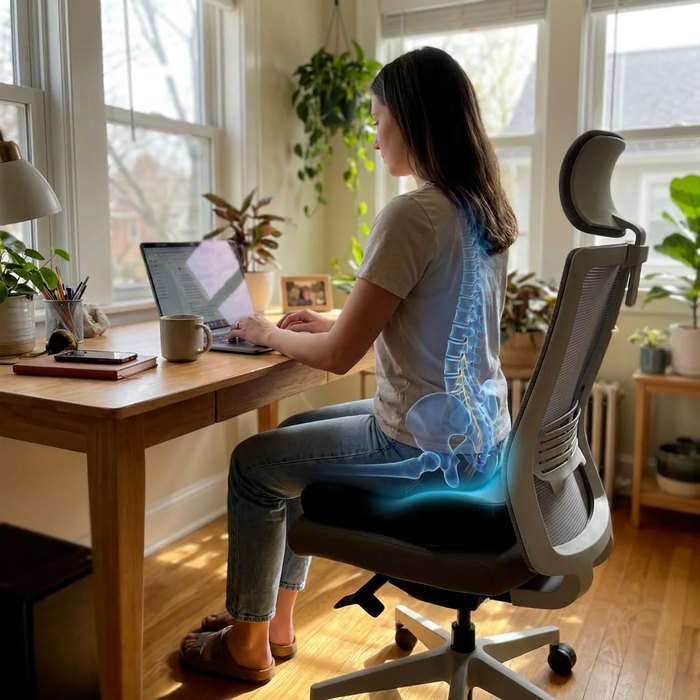
During a workday, a long drive, a flight, or an event, that cycle keeps repeating until you are no longer paying attention to the conversation, the road, or the work in front of you.
You are thinking about your seat.
And when the cushion you bought does not fix it, the conclusion feels obvious:
"I must have bought the wrong cushion."
But there is another possibility.
You have been judging cushions by the wrong standard.
The Doctor who changed the question
When people deal with recurring pressure while sitting, they are often told to change how they sit. That advice makes sense. But it leaves out the part that matters most:
What is actually supporting your body once you sit down?

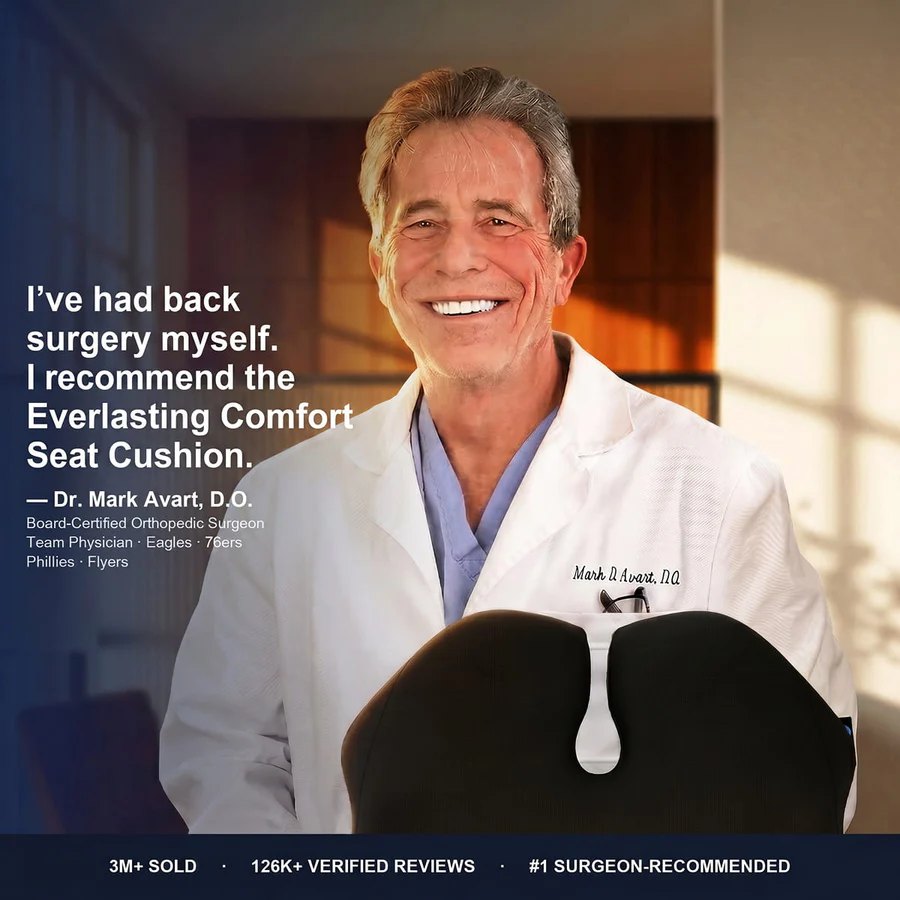
Dr. Mark Avart is a board-certified orthopedic surgeon with Rothman Orthopaedics, a practice known for treating professional athletes as well as everyday patients. His work includes conditions such as sciatica, spinal stenosis, herniated discs, and chronic lower-back pain.
His endorsement brings the conversation back to the physical setup beneath you. A seat cushion is not just extra padding. Its shape determines where your weight is carried, where pressure builds, and whether your tailbone has room to stay clear of the seat.
That is the question this page is designed to answer.
Softness is not the same as Pressure Relief
Most seat cushions are described with the same handful of words:
Soft memory foam
Ergonomic support
Tailbone relief
Pressure relief
Comfortable for long sitting
But none of those descriptions tells you what happens after you have been sitting for an hour, two hours, or an entire workday.
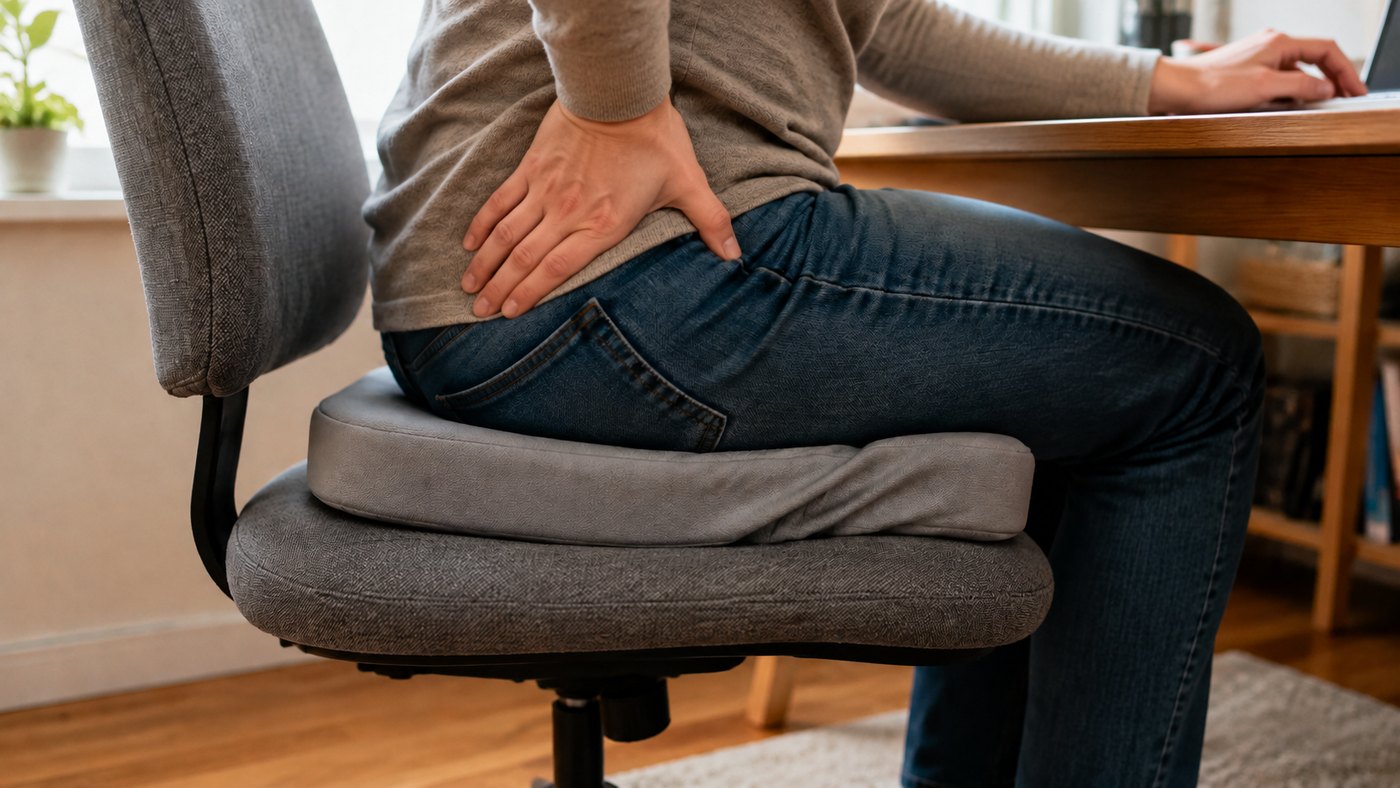
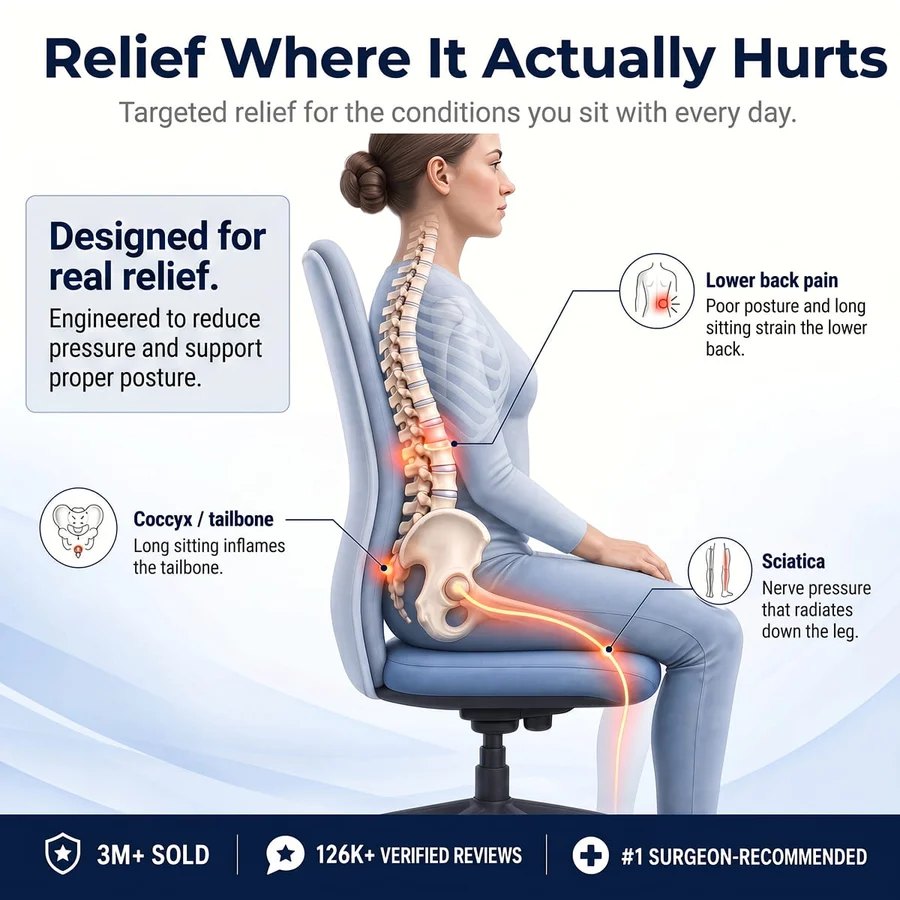
A cushion feels soft when you first sit down and still leaves pressure concentrated in the same sensitive areas.
It adds padding without changing the pressure point beneath your tailbone.
It feels comfortable at first, then flattens, shifts, or forces your weight into two small hot spots at your sit bones.
That is why some people keep trying one cushion after another.
They are adding more foam to the same problem.
The seat-cushion question most people never ask:
Where does the pressure go after you have been sitting for hours?
A different way to look at your seat

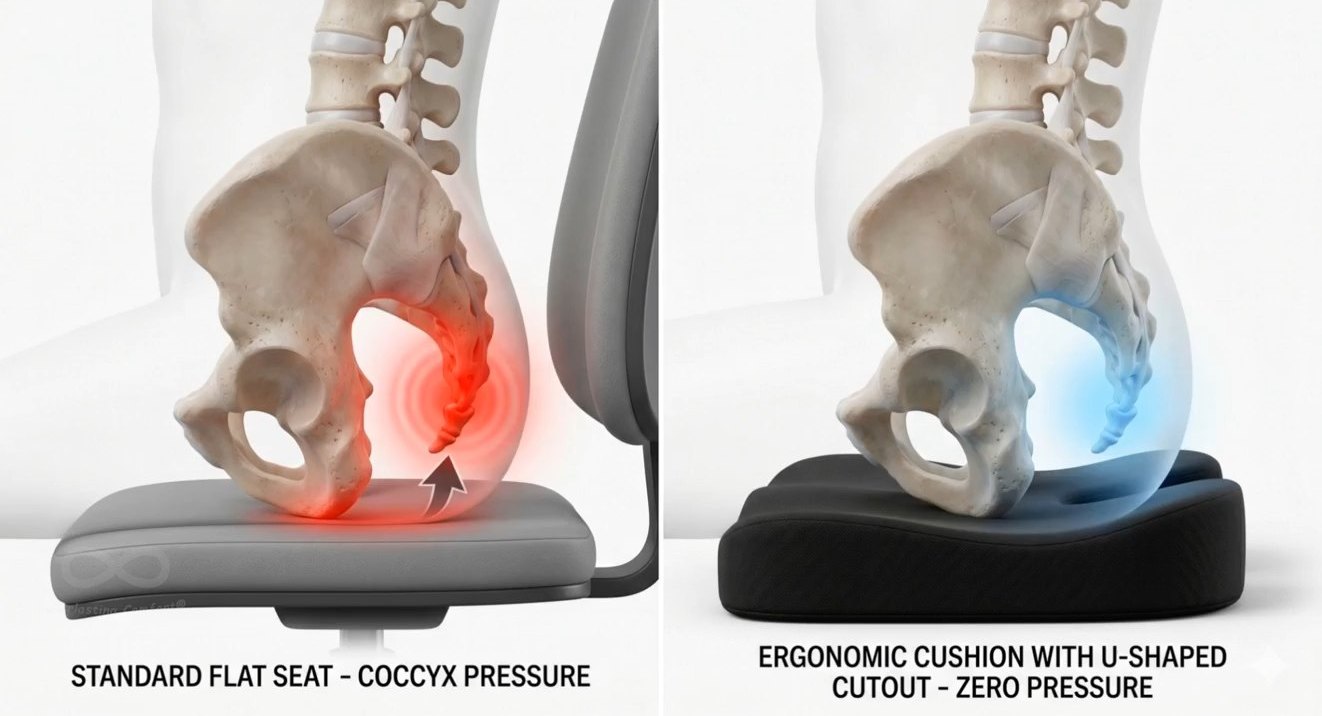
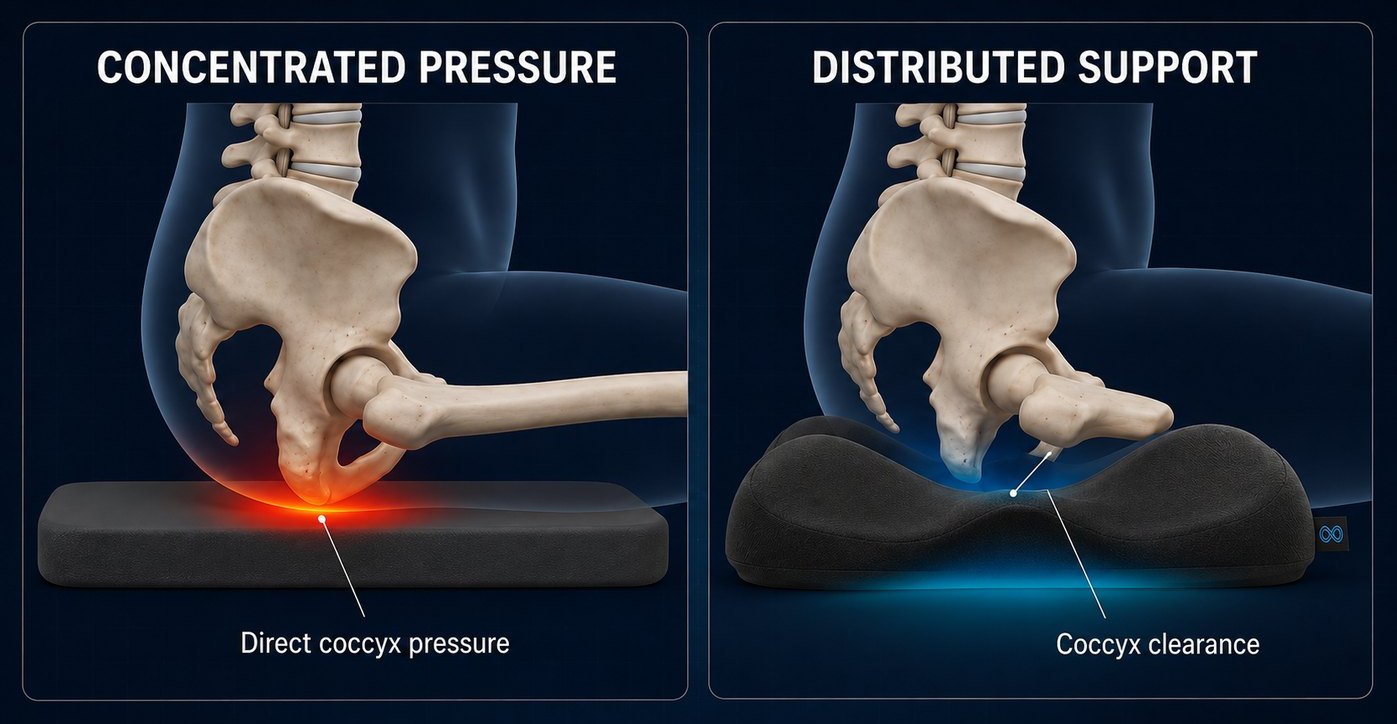
The sit bones carry much of your weight when you sit. The tailbone sits at the rear of that structure, close to the point where many people feel pressure during extended sitting.
If a cushion simply places soft material beneath the same contact points, the pressure is still being carried in the same general area.
A pressure-management design takes a different approach:
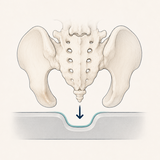
Create space beneath the coccyx instead of pressing directly against it.
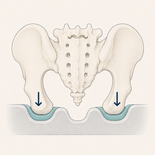
Give the surrounding sitting area enough shaped support to carry the remaining load.
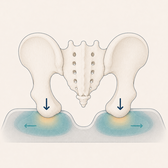
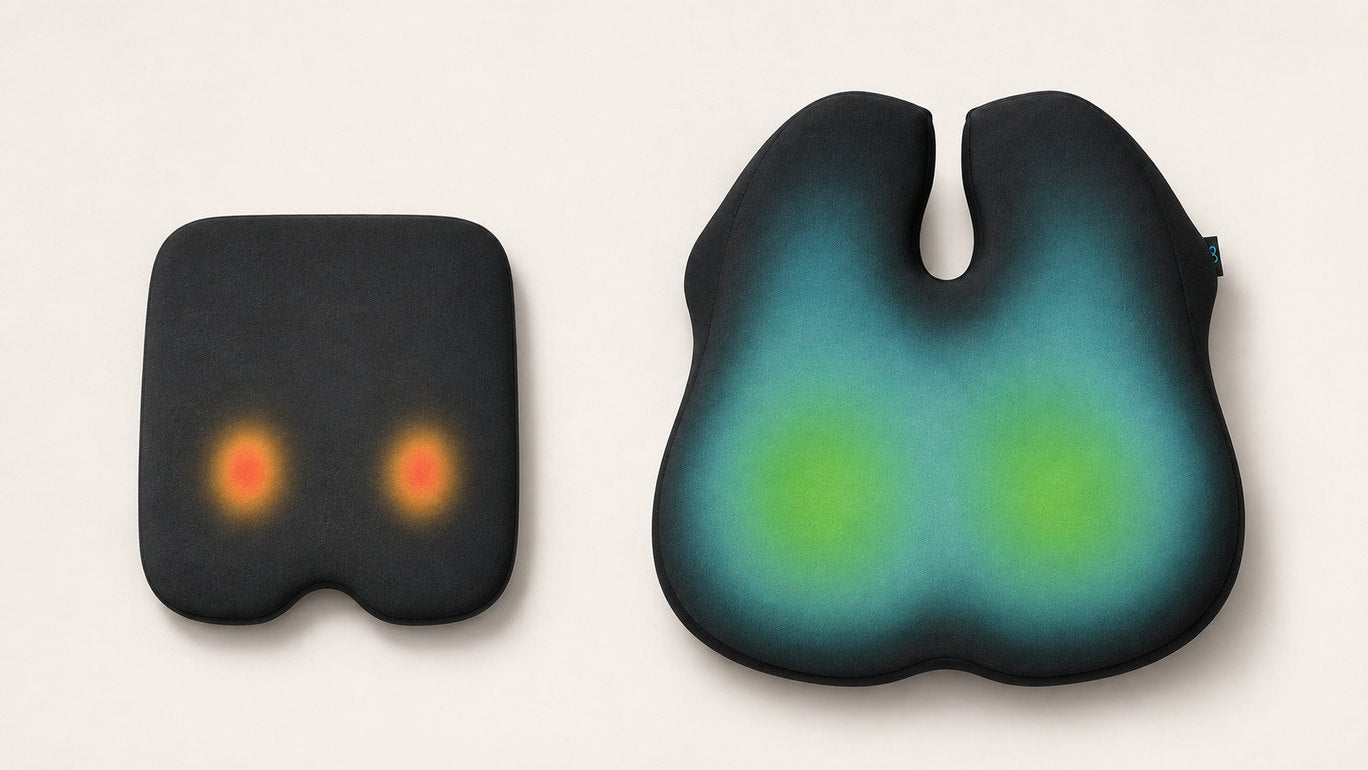
Spread pressure across a broader surface instead of leaving it concentrated in one or two hot spots.
That is the idea behind the Everlasting Comfort Elevate Series Seat Cushion.
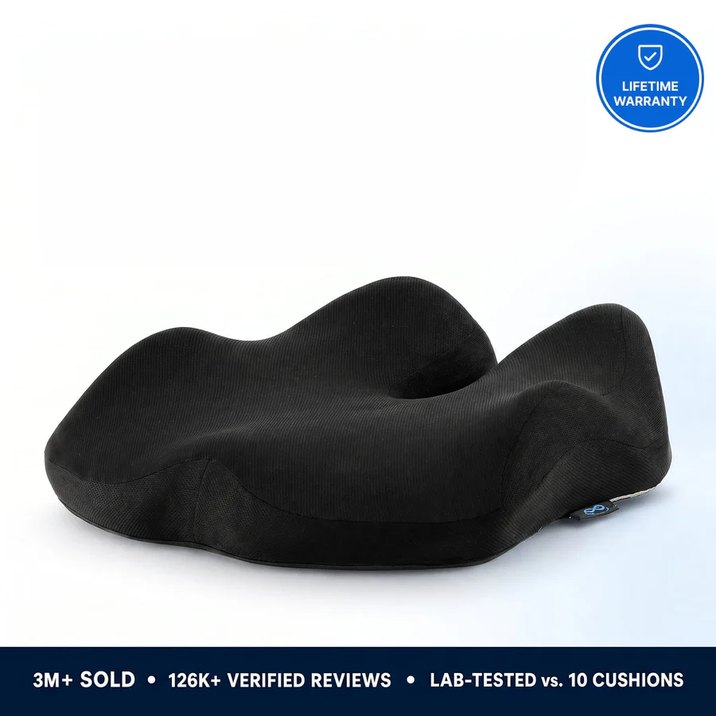
The Elevate Series uses a rear U-shaped coccyx opening and a broad, shaped support surface to change how your weight is carried while sitting.
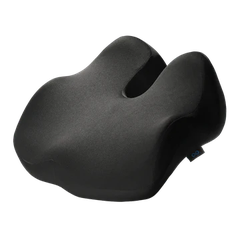
Put the pressure-management design in the seat where you spend the most time.
The Design Difference is in the space it creates
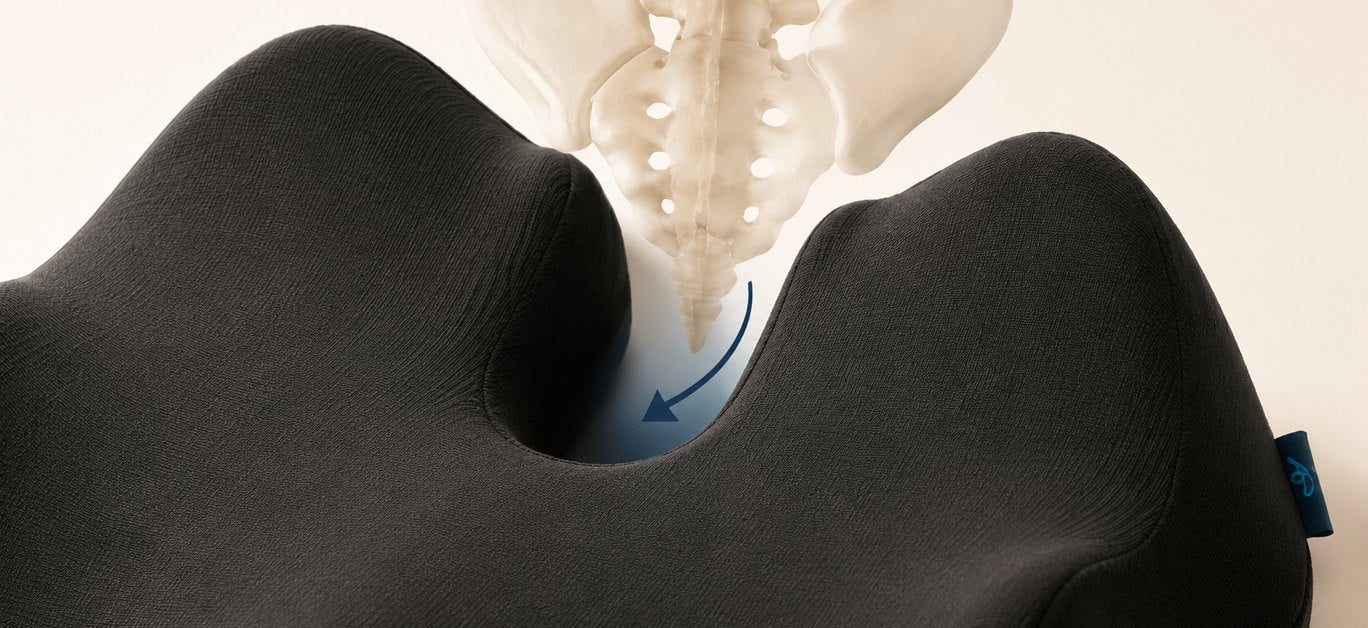
Look at the back of the Elevate Series and you will see the detail a flat cushion does not have: a U-shaped opening designed to create room beneath the tailbone.
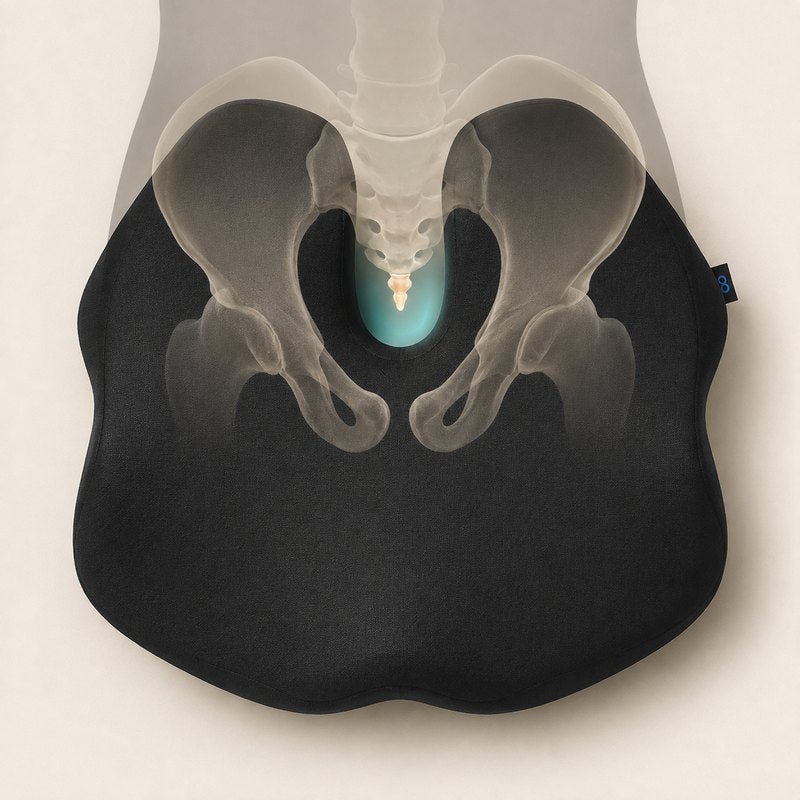
A cushion should not push against the exact point you are trying to protect.
The opening is only one part of the design. The rest of the cushion provides a broad, shaped surface beneath the surrounding sitting area, so your weight has somewhere else to go.
That is the difference between adding softness and changing pressure distribution.
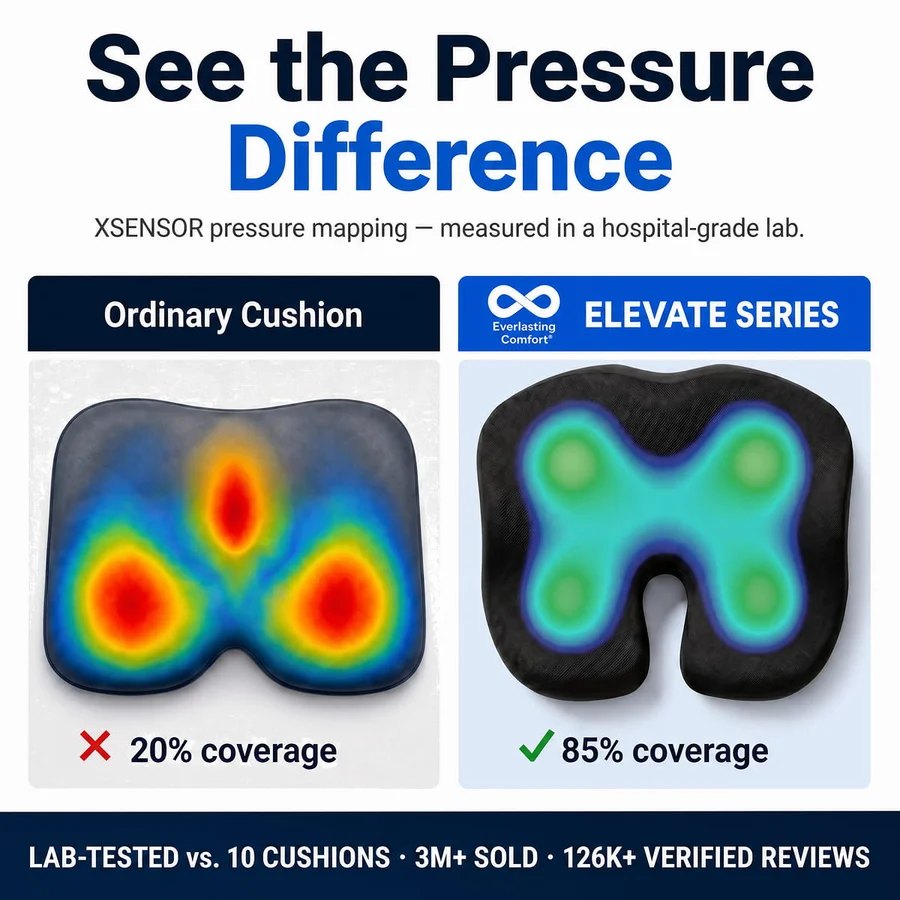
What The Pressure Map Shows
You cannot see pressure by looking at a cushion.
You can see what happens when the cushion is tested on a pressure-mapping system.
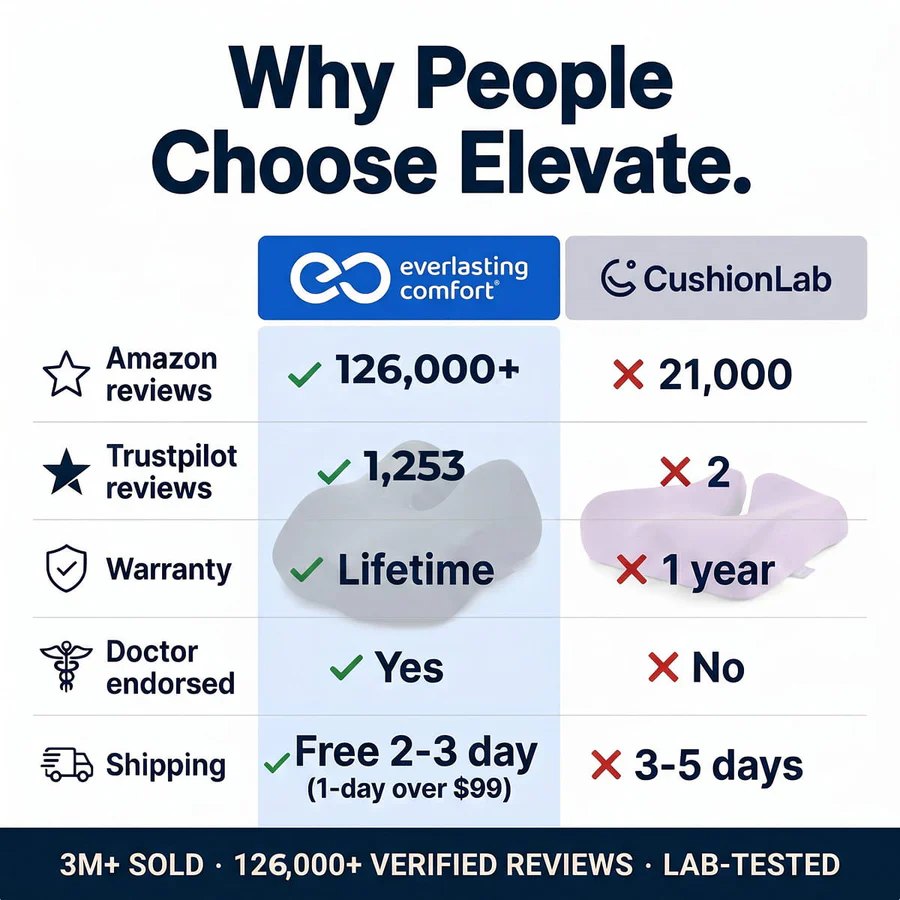
Everlasting Comfort tested the Elevate Series head-to-head against nine competing cushions, including CushionLab, using an XSENSOR LX100 pressure-mapping system with 24 participants across body types.
28%
Among the 9 cushions tested, the Elevate Series recorded 28% lower peak pressure than the next-best cushion.
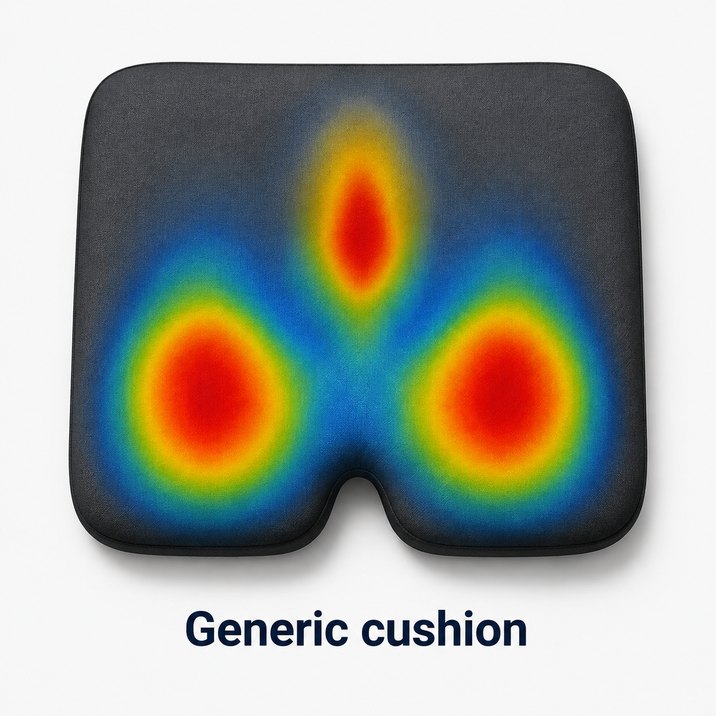
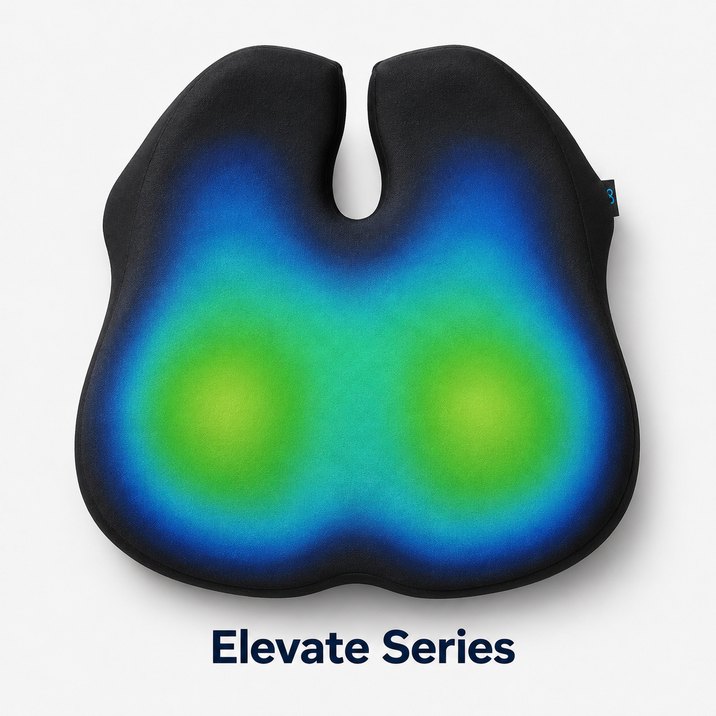
Softness is something you feel at first. Pressure distribution is what matters after you stay seated.
This is why the Elevate Series costs more than a basic foam pad. You are not paying for a thicker piece of foam and a softer first impression. You are paying for a shape built around how weight actually lands on the seat, pressure mapping that compares the result, and a company willing to stand behind the design.
Put the pressure-management design in the seat where you spend the most time.
Generic Cushion Or Pressure-Management Design?
First impression
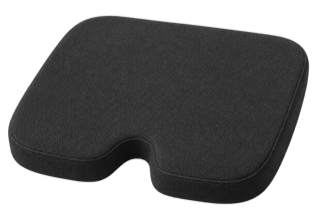
Generic foam cushion
Feels soft when you sit down
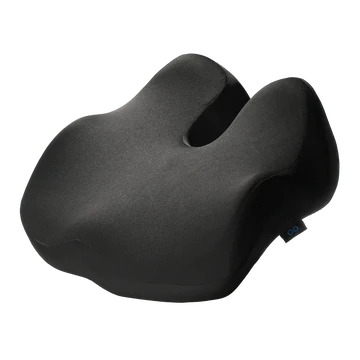
Elevate Series
Feels supportive and shaped beneath you
Pressure problem
Generic foam cushion
Adds padding beneath the same contact points
Elevate Series
Creates a rear U-shaped coccyx opening and spreads support across the sitting surface
Long sitting
Generic foam cushion
Can leave pressure concentrated at the sit bones
Elevate Series
Built to manage pressure during extended sitting
Proof
Generic foam cushion
Usually judged by touch and appearance
Elevate Series
XSENSOR pressure mapping against nine competing cushions
Buying decision
Generic foam cushion
Lower upfront price
Elevate Series
A pressure-management design backed by testing, reviews, and a lifetime warranty
The cheaper option only looks cheaper if you compare materials.
Compare what each cushion is supposed to do, and the difference becomes easier to see.
What People Notice After They Use It
Customers do not describe the Elevate Series only by saying it feels soft. They talk about the things they can do while sitting.
"I have had this for a week and it's amazing. I sit at work for long hours. Before this I would be in pain and stiff when I get up from my chair, now I'm not. This has really changed my life."
"I had a 20-hour flight from the U.S. to China in an economy seat, and the product was excellent. Previously, on an 11-hour flight from the U.S. to Brazil, I experienced pain in my coccyx, my 'tailbone,' within just the first 5 hours. That's when I began looking for a cushion, and I highly recommend this product."
"This memory foam seat cushion is exceptionally comfortable. I used it on a 12-hour flight, and somehow it made the whole thing genuinely comfortable, even quite pleasant. My back pain was nearly entirely gone, and I could at last relax instead of squirming all the time."
"I bought this for my husband. He has a recliner that needs replacement due to heavy use. He mentioned his back was bothering him and so for a temporary fix, I purchased this foam seat cushion. He said it has helped with his lower back pain and his tailbone soreness. He used it on a long car ride, over 4 hours, and normally he's shifting in his seat after an hour or so but this cushion allowed longer time sitting."
90%
would recommend this product
The pattern is consistent: the value shows up after the first few minutes, when the customer is still sitting, still working, still driving, or still traveling.
Put the pressure-management design in the seat where you spend the most time.
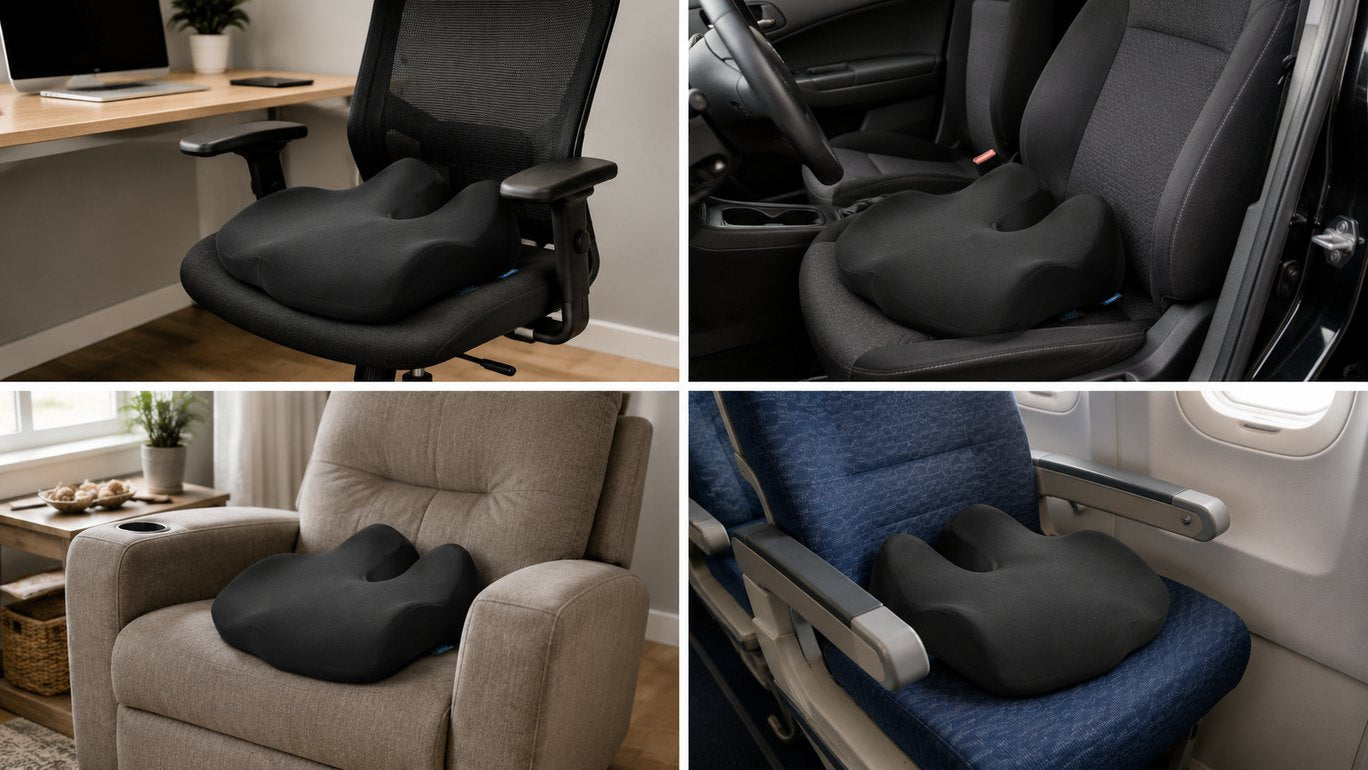
One Cushion For The Seats You Actually Use
The Elevate Series moves from one seat to another:
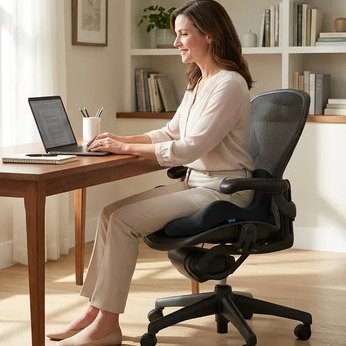
Your desk chair during a long workday
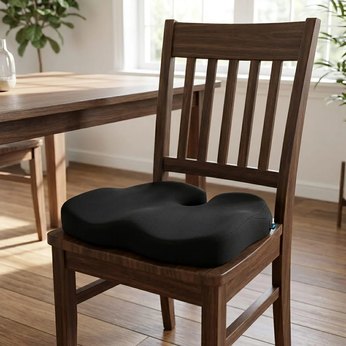
A dining chair or recliner at home
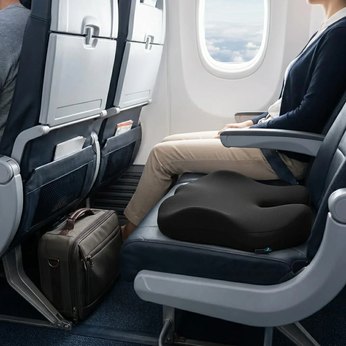
An economy seat during a long flight

Your driver's seat during a commute or road trip
That versatility is why customers often buy more than one. Once the pressure problem is no longer limited to one chair, they want a cushion where they spend the most time.
The product is available in single, two-pack, three-pack, and four-pack options through the Tucker Bundle. Buy more and save more, then place each cushion where sitting usually becomes difficult.
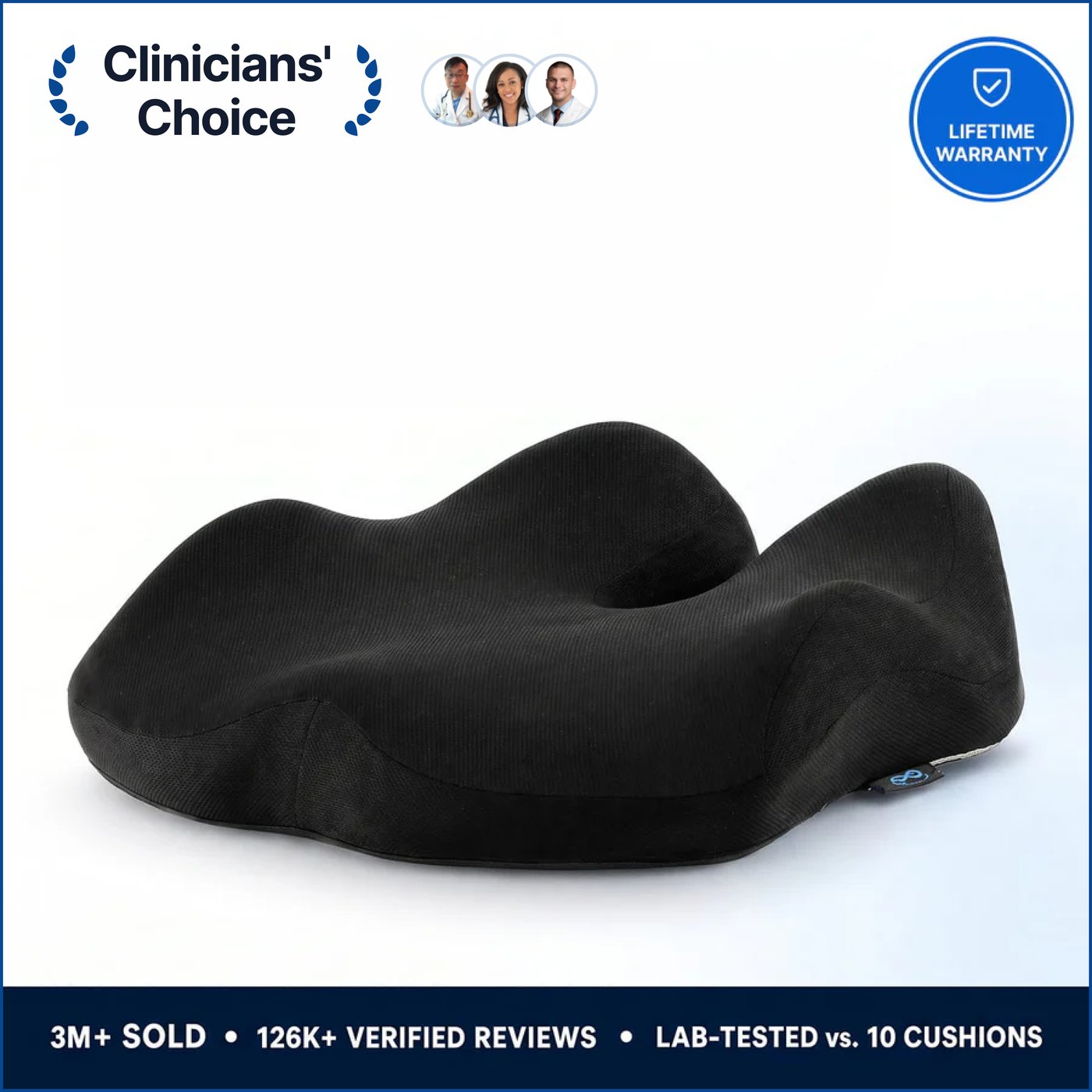
#1 best-selling seat cushion on Amazon
Everlasting Comfort Elevate Series Seat Cushion
The seat cushion 3 million people sit on for tailbone relief.
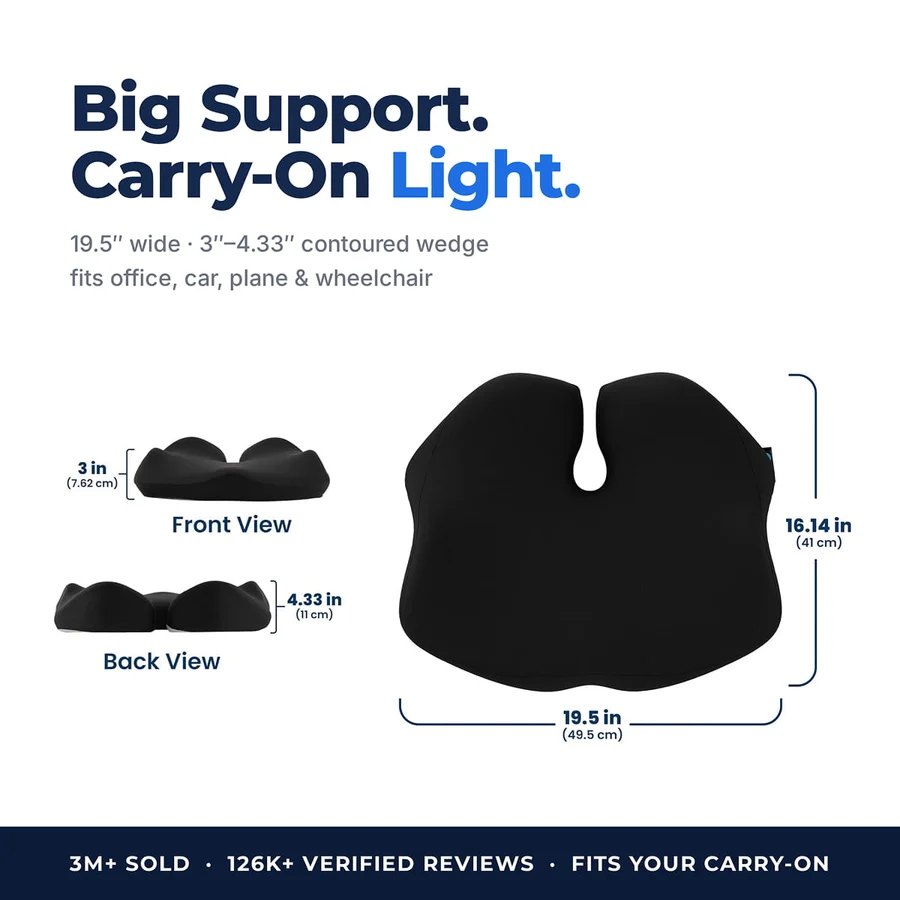
Rear U-shaped coccyx opening
Broad, shaped support surface
XSENSOR pressure-mapping comparison
Designed for work, driving, travel, and everyday sitting
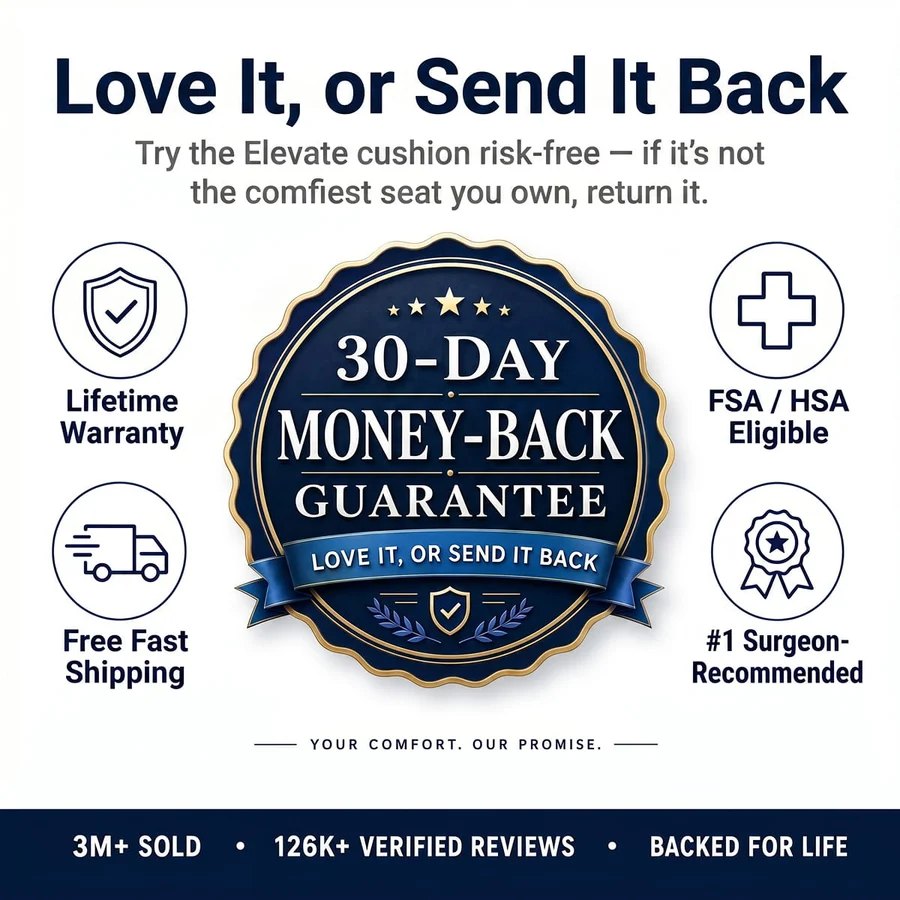
FSA/HSA eligible, subject to plan rules
30-day money-back guarantee
Free shipping
Free expedited shipping over $99
Lifetime warranty
Guaranteed Safe & Secure Checkout
Before You Decide, Check These Three Things
1
Does It Leave Room For Your Tailbone?
A flat cushion places material beneath the entire sitting area, including the rear point where pressure often builds. The Elevate Series uses a U-shaped opening to create space beneath the coccyx.
2
Does It Support More Than One Spot?
Sitting pressure should not be judged by how soft the center feels in your hand. The shaped support surface is built to carry your weight across a broader area instead of concentrating it in two small hot spots.
3
Can You Use It Where Sitting Causes The Problem?
A cushion that stays in one room does not solve the seats you use everywhere else. The Elevate Series is made to move between desk chairs, car seats, recliners, dining chairs, and travel seats.
The Bottom Line
The best cushion is not automatically the softest cushion.
The better question is whether the design changes where your weight is carried after you have been sitting for hours.
The Elevate Series answers that question with a rear U-shaped coccyx opening, shaped support across the sitting surface, and XSENSOR testing against competing cushions.
It gives your tailbone room. It spreads support around the pressure points. And it replaces a guess based on first-touch softness with a design you can examine and a pressure map you can see.
Ready To Stop Repositioning?
If your current cushion feels fine at first and fails later, the problem is not that you need more softness.
You need to look at where the pressure goes.
Clinicians' Choice


Available in 1, 2, 3, and 4-pack options
Make your next long sitting session about the work, the drive, the flight, or the people around you, not the pressure beneath you.


Copyright © 2026. All rights reserved.